Friday, 9 April 2010

Front Cover Ideas 1 - Boogie

The first idea I had was for a magazine called BOOGIE. The idea behind this magazine was to be something similar to Vice Magazine, having a set theme for each issue. For this issue I decided to make the issue about Teddy Boys. I took the name Boogie from the title of a Crazy Cavan and Rhythm Rockers song 'Gonna Rock, Gonna Roll, Gonna Boogie'.

For the layout i took inspiration from a 1960's Concert poster for Jefferson Airplane and Big Brother and the Holding Company.

I liked the style of lettering and the way it was shaped around the picture in the middle. I then drew a layout design for my magazine. I decided to use only two colours; light pink and black.

I then made a really quick mock up of what the cover could look like. I took a quick photo of me wearing a pair of Brothel Creepers with my webcam and then drew some rather wobbly letters around the picture using WordArt from Microsoft Word. If I was to develop this design further I would not use WordArt or a webcam on the final product but would draw the letters by hand or create them entirely in Photoshop and would use a much better camera to take the photo.

Tuesday, 16 March 2010

Research - Online Magazines Street Boners and TV Carnage

STREET CARNAGE is mostly a website that features street fashion critiques called STREET BONERS and compilations of bad television called TV CARNAGE. The site also has a blog, a radio show, and regularly features video shorts made by Gavin and Derrick.
STREET CARNAGE is also a live presentation you can have in your town where Gavin shows a Street Boners "Best Of" and Derrick shows his latest TV Carnage endeavors.
STREET BONERS will eventually be compiled into a huge book which will feature hundreds of pages of Boners as well as contributions from Chloe Sevigny, Debbie Harry, Fred Armisen, Tim & Eric and many more.

Research - Online Magazines Platform

About Us
Platform is your new favourite magazine, you like us because we’ve sorted out your sex-life, told you what not no wear, and asked the questions you wanted to ask her. We celebrate everything great about being young; sex, music, style, life, and probably a whole lot more. We want to do things for ourselves, stay independent, make money, and most of all; have fun.

Research - Online Magazines Cracked

Cracked is an American comedy website, and was originally a humor magazine. Founded in 1958, Cracked proved to be the most durable imitator of the popular Mad.
In print, Cracked blatantly copied Mad's layouts and subject matter. An article on Cracked.com, the magazine's official website, explains that the magazine was "created as a knock-off of Mad magazine just over 50 years ago," and it "spent nearly half a century with a fan base primarily comprised of people who got to the store after Mad sold out."
Cracked's publication frequency was reduced in the 1990s, and was erratic in the 2000s. In 2006, the magazine was revived with a new editorial formula that represented a significant departure from its prior Mad style. The new format was more akin to "lad" magazines like Maxim and FHM. The new formula, however, was unsuccessful and Cracked again canceled its print magazine in February 2007 after three issues. As of 2009, the brand exists solely as a Web site.

Research - Vice


Vice is a free magazine and media conglomerate founded in Montreal, Quebec and currently based in New York City. The magazine covers contemporary indie and youth culture. Vice is known for its controversial content and often strikes a sardonic and ironic pose on debauchery, sex, drugs, violence, crime, and social issues involving race and economic class.
Vice is available in 19 countries. Editions are published in Canada, Austria, Australia, Belgium, Bulgaria, Brazil, Czech Republic, France, Germany, the Netherlands, Italy, Japan, Spain, Mexico, New Zealand, Scandinavia, the United Kingdom, South Africa and the United States. It is free and supports itself primarily through advertising. The current editor is Jesse Pearson in the U.S. and Andy Capper in the UK.
http:// en.wikipedia.org/wiki/Vice_(magazine)

I used to read Vice and thought that it would be good to use in my research because it is different from the mainstream magazines. I much prefer the Vice covers to the MOJO and NME covers, because it is much more minimalist and makes me want to hold on to the issues after i've read them, rather than something like NME which i'm much more likely to throw away or just cut up.
http:// www.viceland.com/uk/
The Vice website is very important to the magazine, it features archives of back issues, a blog, a photo blog and allows interaction between the magazine and its readership.
Vice has also expanded its brand into other areas including;

Publishing
The magazine has published the collections The DOs and DON'Ts Book and The Vice Guide to Sex and Drugs and Rock and Roll. In 2008, The Vice Photo Book was released, a collection of the most powerful photography published in previous editions of Vice.

Clothing
Vice has created a retail clothing chain, Vice Retail. Vice also has strong ties with clothing line American Apparel, a frequent advertiser in Vice Magazine.

Record label
Vice Recordings has released albums and singles, mainly in the U.S. market, by The Black Lips, Bloc Party, King Khan and the Shrines, The Streets, The Raveonettes, 120 Days, Justice, The Stills, Death From Above 1979, Fucked Up, Chromeo and Charlotte Gainsbourg.

Television and film
VBS.tv is available for viewing on the internet, with the intention of circumventing network intervention over content issues and allowing for a global, free-of-charge distribution plan akin to that of the magazine. Vice Films released a feature length documentary, Heavy Metal in Baghdad, in 2008 as well its first theatrical release entitled White Lightnin' in 2009 and a documentary on professional bull riders entitled The Ride due out in 2010.

Venues
Vice also runs a pub and music venue in Shoreditch, East London, The Old Blue Last

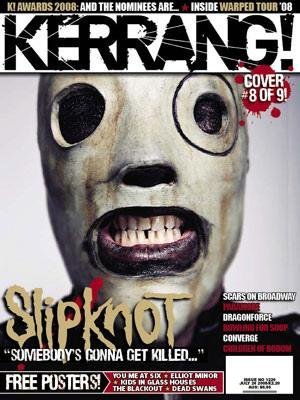
Research - Kerrang! & Q


Kerrang! is a rock music magazine published by Bauer Consumer Media in the United Kingdom. The magazine's name is onomatopoeic and refers to the sound made when playing a power chord on an electric guitar. - http://en.wikipedia.org/wiki/Kerrang!

Q is a music magazine published monthly in the United Kingdom, with a circulation of 130,179 as of June 2007. Q's current editor is Paul Rees, former editor of the UK edition of Kerrang!, another musical Bauer publication based on heavier rock/metal music. - http://en.wikipedia.org/wiki/Q_(magazine)

Q magazine and Kerrang! are both good examples of how magazines are expanding their brands. Both have TV channels which play music videos, radio stations and both hold their own award shows. Another important part of their brand is their websites:
http://www.qthemusic.com/ and http://www.kerrang.com/
both play an important role for the magazine. For example from the Kerrang! website you can buy tickets and other band merchandise. You can also download the Kerrang! Podcast from the website which shows how print based media is having to combine with new media technologies. Print based media is becoming redundant because of the huge amounts of free information and entertain that is available on the internet.

Monday, 15 March 2010

Research - NME


The New Musical Express (better known as the NME) is a popular music magazine in the United Kingdom which has been published weekly since March 1952. It was the first British paper to include a singles chart, which first appeared in the 14 November 1952 edition. The magazine's commercial heyday was during the 1970s when it became the best-selling British music magazine. During the period 1972 to 1976 it was particularly associated with gonzo journalism, then became closely associated with punk rock through the writing of Tony Parsons and Julie Burchill. - http://en.wikipedia.org/wiki/NME

This issue of NME looks more like a tabloid than the other music magazines I have looked at. Rolling Stone and MOJO both had much less cover-lines and puffs on their covers. NME has many cover-lines, puffs and pictures other than the cover star. The cover photo is also very different from Rolling Stone and MOJO who both used a medium close up photo with a plain background, however NME has used a picture of Lily Allen with her outside. This relates to the theme of the issue which is about festivals. This again makes NME look more like a tabloid which often use candid photos of celebrities, rather than photos from a professional photo-shoot. The puff is used a lure, which makes the reader think they have a chance of winning something and that it was worth paying the money for the magazine. NME also uses the masthead across the top which advertises another feature of the issue. Many Music magazines regularly feature lists/guides, 10 ten artists of 2009, 50 best albums ever, festival guide etc. Again with NME we can see lots of use of the colour red, which is meant to be eye catching and make it stand out, however when every magazine on the shelf is using red and orange it doesn't really work as well as it should.